The Impact of Firewall (DPI) and its Consequences for Users and Businesses (Pakistan’s Slow Internet)
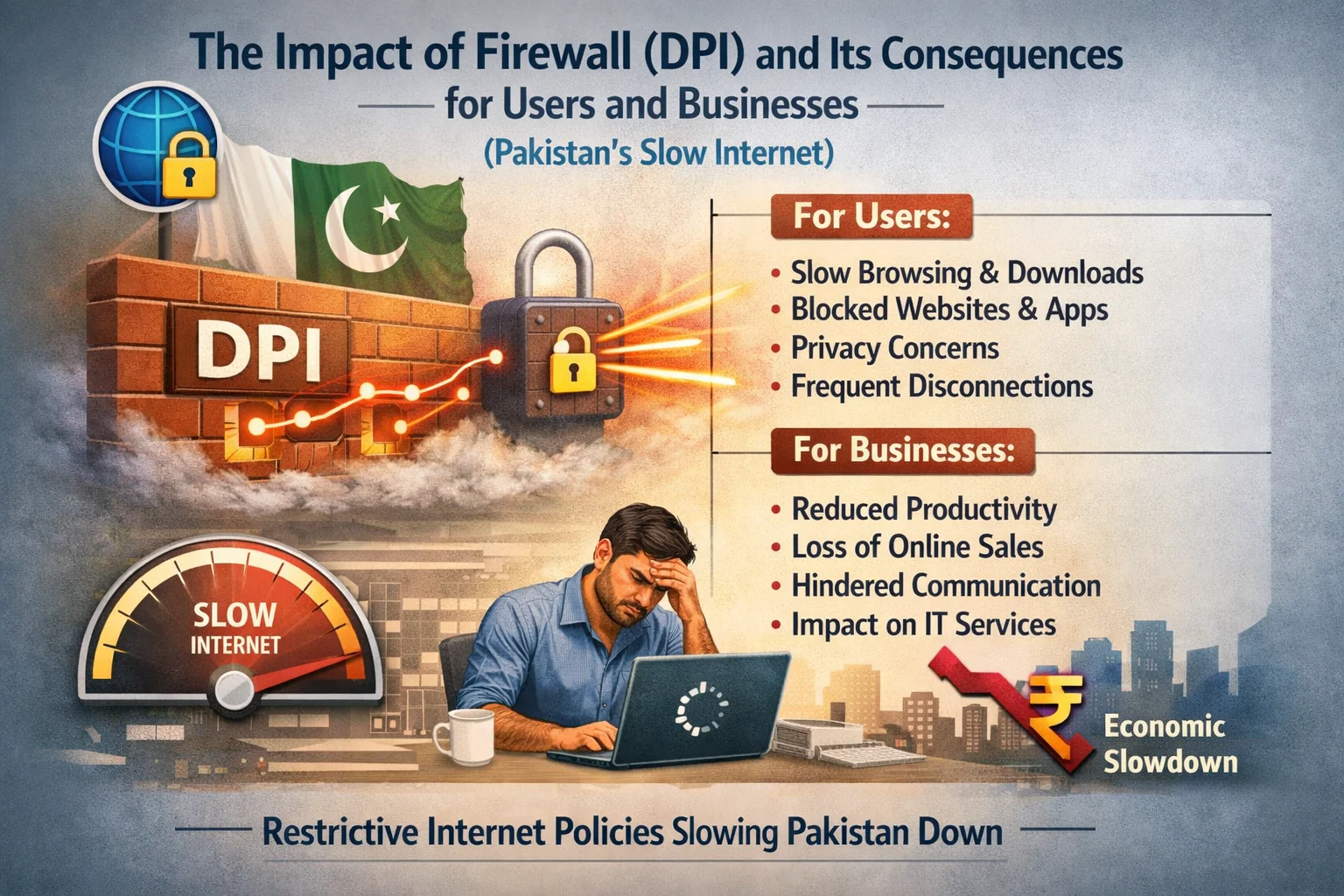

In recent times, Pakistan has faced significant internet slowdowns, with many attributing it to the implementation of firewalls, particularly Deep Packet Inspection (DPI) systems. This article delves into the concept of firewalls, their effects on the country, their benefits and drawbacks, and the possible impact on businesses and privacy.

1. What is a Firewall?
A firewall is a security system that monitors and controls incoming and outgoing network traffic. It acts as a barrier between a trusted network and untrusted external sources like the internet. In Pakistan’s case, it seems DPI (Deep Packet Inspection) technology has been deployed to filter and monitor internet traffic at a granular level, inspecting the data being sent and received by users.

2. How Does DPI Impact Internet Speed?
The DPI framework analyzes each packet of data passing through the network. This inspection, merged with the massive amount of internet traffic in Pakistan, is a significant reason for the slowdown. The more traffic there is, the more load on the network, which leads to delays.

3. Is DPI Necessary for Security?
While DPI is intended to increase security by identifying malicious content and preventing cyber threats, its deployment can also lead to privacy concerns and slow internet speeds. Multinational companies find it challenging to operate in such an environment, as high-speed internet is crucial for daily operations.

4. Effects on Mobile Devices and VPN Usage
Since the implementation of the firewall, mobile devices in Pakistan have been reported to work poorly, particularly when accessing the internet. One reason be the DPI’s interference with encrypted traffic, like that from VPNs (Virtual Private Networks). VPNs are used by businesses and individuals to keep privacy, bypass geo-blocks, and securely send data. DPI systems detect and throttle VPN traffic, causing performance issues.

5. WhatsApp, Facebook, and Google: Are They Affected?
Many users have expressed concerns about apps like WhatsApp, Facebook, and Google being interrupted or compromised after these measures. While DPI can track traffic, the belief that apps can automatically take pictures, record calls, or intercept messages when the phone screen is off is more likely a misconception. These apps need user permissions, and unless those permissions are misused, they don’t work without consent. Nevertheless, DPI can monitor traffic, which could raise privacy concerns, especially in terms of metadata and communications.

6. The Role of VPNs, Proxies, and Privacy Concerns
- VPNs: Many users resort to VPNs to bypass these restrictions, but with DPI in place, even VPNs can be detected and throttled, making it harder for users to keep privacy. For businesses, using a VPN is essential to protect sensitive information, but the current infrastructure can make it difficult to sustain smooth operations.
- Proxies: Proxies are another method to bypass restrictions, but like VPNs, they also face throttling or blocking.
- Privacy: While the stated purpose of DPI is to make certain security, it comes with significant privacy implications. The government can potentially track user activity, creating unease among citizens who value online anonymity and data protection.


7. Business Impact: Multinational Companies at Risk?
For multinational corporations (MNCs), secure and fast internet is crucial for day-to-day operations. The slow internet speed and restrictions caused by firewalls and DPI harm these businesses, especially those that rely heavily on video conferencing, cloud storage, and other internet-based operations. Delays in communication and the inability to use VPNs securely result in productivity losses.

8. Internet Connectivity: How It Works Globally
The internet functions through interconnected networks that span the globe, using undersea cables, satellites, and data centers. These systems send information, enabling real-time global communication. Firewalls like the one in Pakistan can interfere with these processes by blocking certain websites, videos, and services, making the internet less accessible for users.

9. Effects of the Firewall on Pakistani Businesses and Communities
The slowdown caused by DPI impacts the entire community in Pakistan. Small businesses struggle with transactions, MNCs may experience delays in operations, and freelancers may face challenges in meeting deadlines. Additionally, the restriction on VPNs and other privacy tools leaves users vulnerable to potential cyber-attacks and government surveillance.

10. Can the Issue Be Resolved?
Solving the internet slowdown caused by DPI would need a multi-faceted approach:
- Scaling up infrastructure: With increasing internet users and traffic, Pakistan must improve its internet infrastructure, especially to handle the extra load from DPI systems.
- Balancing Security and Privacy: DPI can offer security, but it must be implemented with proper oversight to prevent misuse and guarantee that privacy concerns are addressed.
- Optimizing Traffic Flow: Intelligent traffic management systems can be used to reduce the load and guarantee smooth internet functioning.
- Regulating VPN Access: Instead of a total crackdown on VPNs, businesses could be allowed regulated VPN use for secure communications.

11. How to Protect Yourself from Hackers and Privacy Breaches
With the firewall and DPI in place, users may feel more secure, but they are not immune to cyber threats. Here are some steps to stay protected:
- Use Secure VPNs: Even though VPNs are throttled, choosing a reliable and secure VPN service is still a must for privacy protection.
- Update Software Regularly: Keeping all apps and operating systems updated ensures that you are protected from known vulnerabilities.
- Limit App Permissions: Review the permissions granted to apps, especially for sensitive information like your camera and microphone.

Navigating the Internet with Firewall Restrictions
While the implementation of DPI may offer increased security, the consequences for internet speed, privacy, and business operations are significant. Pakistan must find a balance between safeguarding its digital space and ensuring smooth internet access for its citizens and businesses. Solutions like upgrading infrastructure, allowing regulated VPN access, and transparent oversight can help mitigate the negative effects. Ultimately, a focus on both security and the freedom of information is crucial to keeping Pakistan’s digital ecosystem thriving.
Purpose
This article addresses the current issues with internet slowdowns, firewalls, privacy, and their effects on both individual users and businesses. By understanding the broader picture, we can navigate these challenges more effectively while advocating for solutions that protect both privacy and security.
You may like this
click here to watch videos on youtube channels & subscribe
Click here to create a account on adsterra network for online earning money
Click here to Sponsored
Sponsored Ads







1 comment